|
|
| Responding to Beijing 2008: An Investor Boycott of Coca-Cola |
|
Monday, July 23rd, 2001
|
Led by such Olympics sponsors as Coca-Cola, the American establishment has backed China�s plans to turn the 2008 Games into a propaganda circus. Memo to Coca-Cola chairman Douglas Daft: things go better with integrity. By Eamonn Fingleton.
TOKYO. Beijing�s victory in the battle for the 2008 Olympic games is grim news for those of us who oppose the unprincipled globalism the U.S. establishment has espoused in recent years. Once again American leaders have caved in to the stone-faced tyrants of the Chinese communist regime. In supporting Beijing�s bid for the games, they have ignored a mountain of evidence about the Chinese Communist regime�s human rights record � a record that makes a mockery of the values of freedom and fairness embodied in the Olympic spirit.
As Sidney Jones, Asia director of Human Rights Watch, has pointed out, the International Olympics Committee did not even try to extract any guarantees on human rights from the Chinese leadership before awarding the games to Beijing. The unmistakeable message for the Chinese leadership is that the West is, to quote Mao Tse Tung�s insult of the 1960s, a paper tiger. Ordinary members of the public in the West may abhor China�s flouting of Western values on everything from human rights to fair trade but Western values mean nothing if the West lacks strong, principled leadership to defend them.
Although the decision to accept Beijing�s bid was ostensibly merely that of the IOC�s official delegates, the real responsibility lies elsewhere. Had the American establishment opposed the Beijing bid, the outcome of the IOC�s corrupt voting process would almost certainly have been different. In the event, almost the entire American establishment � including even the mealy-mouthed editorial writers of the New York Times � found reasons not to speak out against the Beijing bid. This is all the more lamentable for the fact that elsewhere there were key pockets of opposition to China. The European Parliament, for instance, condemned Beijing�s bid.
Bush kow-tows to Beijing
In the end the Bush administration�s lead proved crucial. It adopted a policy of official neutrality that constituted a tacit green light to American Olympics delegates to throw their support behind Beijing. The administration�s stance was clearly driven by various American corporations that hope for large short-term profits from sponsoring the Beijing games. The administration�s spinelessness was mirrored in Congress, where Republicans quashed an effort by the California Democrat and Nazi Holocaust survivor Tom Lantos to oppose the Beijing bid.
All this confirms what we have long suspected: for all the globalists� noble rhetoric, globalism in practice means selling out Western values to the highest bidder. The prognosis for the United States as it struggles to conserve what is left of its once-world-beating industrial base is bleak.
In the case of the 1980 Moscow Olympics, American leaders organized an official boycott to show its displeasure at how the Soviet Union flouted human rights. Though the case for such a boycott is at least as strong this time, it won�t happen. The reason is simple: whereas few if any U.S. lawmakers twenty years ago were on the take from the Soviet Union, Washington is now awash in Chinese money. In any case a boycott of the games would seem unfair to thousands of young American athletes, for many of whom Beijing 2008 will be their only realistic hope of garnering a gold medal.
Americans are not, however, bereft of other ways to turn the tableson the globalists who have given us the Beijing Olympics. We should focus on the major American corporate sponsors of the Olympic Games, companies such as McDonald�s, TimeWarner, and most of all Coca-Cola. Working through surrogates in the media, these companies have maintained that awarding the Games to China would benefit the human rights cause by encouraging the Chinese regime to move towards Western values. Let�s hold them to that. As Sidney Jones, Asia director of Human Rights Watch, has said, "if abuses take place as preparations for the Games proceed, it won't be just the Chinese authorities who will look bad; the IOC and the corporate sponsors will be complicit."
A shareholder boycott of Coca-Cola shares
It is worth focusing in particular on Coca-Cola. Why? For a start, the company sanctimoniously boasts that �nothing is more important to our success than integrity.� Another reason why Coca-Cola deserves special attention is that it has allowed itself to be promiscuously used as the ultimate poster-child of globalism.
As presented by advocates of globalism, the proliferation of Coca-Cola signs in places like Japan, Taiwan, and Korea and more recently in China is �proof� that these markets are opening up rapidly to American goods. Not only that, it supposedly shows that the whole world is embracing American culture. In essence the argument is that in a world where Coca-Cola knows no borders, it is churlish of Uncle Sam to continue to fuss about America�s trade deficits.
Yet the sad truth is that the presence of a company like Coca-Cola in foreign markets is no indication that such markets are generally open to American trade. Quite the reverse in many cases.
In reality many mercantilist nations embrace a few token American brands such as Coca-Cola as part of an artful propaganda campaign to disguise how closed they really are to American goods. In effect Coca-Cola and similar businesses enjoy affirmative action status in East Asia. They are chosen precisely because they do virtually no exporting from the United States. Thus a mercantilist nation can open up to such businesses without fear of incurring any significant increase in its imports. The point is that such businesses create most of their added value in the countries they serve.
In effect by embracing low-importing businesses like Coca-Cola, a mercantilist nation achieves the appearance of being open to American trade while buying almost nothing from the United States.
Probably no one understands better how the American public has been misled by all this than Coca-Cola�s current chairman Douglas Daft. The Australian-born Daft climbed to the top via a stint as head of the company�s Japan operations. It was during Daft�s time in Japan that the company began in earnest to betray its American roots by enthusiastically posturing in the media as the poster child of American globalism. In return it benefited enormously from enhanced affirmative action status in Japan. (Coca-Cola vending machines are now everywhere in Japan, even on the platforms of public transit stations. In the case of every machine, the Japanese bureaucracy has had to be wooed for the appropriate permits. In Japan more than probably anywhere else on the planet there is never a quid without a quo. One thing is undeniable: Coca-Cola is clearly engaged in supporting Japan's extensive propaganda program on trade and globalism.
All this makes it only fitting that principled opponents of globalism should hit Coca-Cola where it hurts � in the directors� stock options. On the first major new deviation by China from Western values, therefore, the appropriate response is to organize an investor boycott of Coca-Cola stock. If only a handful of major institutional investors can be persuaded to comply, the impact on Coca-Cola�s stock price would be substantial � and the knock-effect on the value of the stock options would be little short of devastating for Coca-Cola�s globalist bosses.
Coca-Cola�s website boasts about the corporation�s �strong sense of accountability.� Let�s show Coca-Cola what accountability means.
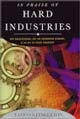
Eamonn Fingleton is the author most recently of In Praise of Hard Industries: Why Manufacturing, Not the Information Economy, Is the Key to Future Prosperity (Houghton Mifflin, 1999).
|
|
Contact Eamonn Fingleton |
|
|
|