|
|
| Why Clinton Won't Mention Trade in His Memoirs |
|
Tuesday, August 14th, 2001
|
Don�t blame Bill Clinton for selling his memoirs to a German-owned publisher. He did not have much choice. That�s because there are few American-owned publishers left that can pay a $12 million advance. Actually there are few American-owned publishers left. Period. By Eamonn Fingleton.
Am I the only one to notice a certain irony in last week�s news that Bill Clinton has sold his memoirs to the New York publisher Knopf? Knopf is an imprint of Random House; and Random House was, of course, acquired by a German media conglomerate in 1998. As an accomplished spinmeister, Clinton would surely have preferred to have been published by an American-owned house (particularly given the size of his advance, which at a reported $12 million is believed to be a world record). Unfortunately for Clinton � and even more unfortunately for the American nation � American-owned publishing companies are going the way of the do-do. And therein lies a tale of compelling relevance for anyone interested in the American trade crisis.
In a historic sell-off that has its roots in the trade crisis, countless American book publishing companies have been sold to foreigners in recent years. This sell-off reflects an iron law of economics: every dollar a nation incurs in current account deficits must be funded by a dollar of foreign finance. The relationship is not direct, but in the aggregate the implications are inexorable. In the case of the U.S. trade deficits, some of the foreign funding comes in the form of foreigners buying U.S. Treasury bonds. Some comes from foreign banks lending to American counterparts. And some � a rapidly increasing proportion � comes from foreigners making outright purchases of American businesses.
In few industries has the great sell-off gone so far as in book publishing. Moreover many of the takeovers, including the purchase of Random House by the Bertelsmann group of Germany, occurred on Clinton�s watch. The result is that well over 50 percent of the American book publishing industry is now foreign owned.
America�s three biggest book publishers are foreign-owned
Strikingly, the three largest American book publishers are now foreign owned. The biggest of them all is the Bertelsmann group. When Gutersloh-based Bertelsmann acquired the Random House group from Si Newhouse, it became at a stroke the world�s largest English-language book publisher. Including earlier acquisitions, the combined Bertelsmann organization owns no less than 12 major English-language publishing groups and over 50 imprints. Just for the hell of it, let�s list merely some of Bertelsmann�s more important American imprints (apologies to those with a short attention span � this is a long list!): Bantam, Delacorte, Dell, Dial Press, Del Rey, Fawcett, Ivy, One World, Wellspring, Clarkson Potter, Crown Business, Crown Publishers, Harmony Books, Three Rivers, Broadway Books, Currency, Doubleday, Nan A. Talese, WaterBrook Press, Harold Shaw Publishers. Fodor's Travel Publications, Pantheon Books, Schocken, Vintage Anchor Books.
After Random House in the American publishing league table comes the British-owned Penguin group, which owns Viking, Dutton, and Putnam. In third position comes another foreign-owned group, HarperCollins, which is a division of Sydney, Australia-based News Corporation. Other major foreign players in the U.S. book publishing business include Stuttgart-based Holtzbrinck, which owns Farrar, Straus & Giroux, St. Martin's Press, and Henry Holt. Just two months ago Vivendi Universal of France announced it was buying Houghton Mifflin, one of America�s oldest publishing houses.
In the field of professional publishing, the spate of foreign takeovers in recent years has also been spectacular. The result is that in an industry once entirely dominated by American companies, the world�s biggest three professional publishers are now Reed Elsevier of Britain, Thomson of Canada, and Wolters Kluwer of the Netherlands. Each of these companies has grown in large measure thanks to takeovers of American businesses.
For Simon & Schuster, a bridge too far
Given the degree of foreign ownership in the American publishing industry, the fact that Clinton did not find an American buyer for his memoirs was really unremarkable. Only one major American-owned house was even mentioned as a plausible candidate to buy the Clinton memoirs. That was Simon & Schuster, which ranks fourth in size in the American publishing industry. Given that it is owned by Sumner Redstone�s giant Viacom, it has more clout than any other American publisher to buy big books � but by all accounts its resources were not enough. Unfortunately Simon & Schuster had already plunked down a reputed $7 million for the memoirs of another controversial political figure � none other than Hillary Rodham Clinton. In an industry noted for the fickleness of consumer taste, Simon & Schuster clearly thought better of putting too many eggs in one political basket. Given the ever-present risk of Clinton fatigue, that was probably prudent. To paraphrase Lady Bracknell, to take a bath on one Clinton book might be considered misfortune but to take a bath on both would be carelessness.
One thing is clear: the story of the Clinton administration�s trade policies is unlikely to figure prominently in Bill Clinton�s memoirs. That no doubt is the way the money men in Gutersloh will like it. After all Germany Inc. was one of the great winners from the Clinton administration�s failure to stand up for fair trade as the American market was deluged with foreign goods in the 1990s.
For the record, America�s current deficit in 2000 was $435 billion. That was more than eight times the total of $51 billion recorded in 1992, the last year before Bill Clinton took office.
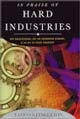
Eamonn Fingleton is the author most recently of In Praise of Hard Industries: Why Manufacturing, Not the Information Economy, Is the Key to Future Prosperity (Houghton Mifflin, 1999).
|
|
Contact Eamonn Fingleton |
|
|
|