|
|
| As the fat lady sings, it's curtains for the high-dollar era |
|
Monday, August 20th, 2001
|
We are no longer alone. As the dollar wilts on currency markets, many in the American intellectual establishment have suddenly made an interesting discovery: trade does matter after all. By Eamonn Fingleton.
TOKYO. Amid much talk about the danger of an imminent dollar crash, Wall Street is suddenly focusing on America�s huge trade deficits. What a contrast this is compared with just two years ago. At that time Wall Street was bulling the dot.coms to the sky and proclaiming a new era in which exportless postindustrial businesses would not only sustain but strengthen American power.
Some of us were never fooled by the New Age talk. Perhaps I can be forgiven for recalling some words of mine from 1999. Writing in the Harvard Business Review, I commented: �America's current account deficits are rapidly approaching dangerous levels, and they will continue on that track as long as the country's reliance on post-industrial businesses grows. The question for policy makers and corporate executives alike is how much longer the U.S. dollar can take the strain without a massive devaluation similar to those it suffered in the mid-1980s and early 1990s.�
When I wrote those words I was prepared to wait up to five years to be fully vindicated. I had come to realize that government intervention in support of a currency can often postpone for a startlingly long time the effects of underlying economic trends. This applies in spades where, as has been the case with the high-dollar policy, government officials on all sides have been on board (not only has Washington been assiduously talking up the dollar but governments in such crucial capital-exporting nations as Japan and China -- thus far at least -- have seen major self-serving advantages in going along with Washington�s agenda).
Telling signs that the dollar is on the skids
Several pointers in the last month, however, have convinced me that the dollar is now on the skids. This is not necessarily to suggest that a major crash is inevitable, let alone imminent. Much depends on how the Bush administration plays its cards. In the short term the adjustment may be limited to a fall of 15 to 20 percent over the next year. But, absent an absolutely fundamental change in trade policy, the long-term outlook for the dollar is bleak. Against the Japanese yen in particular, the dollar is likely over the course of the next several years to lose more than 50 percent of its recent value.
Let�s be clear on what has changed in recent months. First there was President Bush�s remark in July suggesting that the dollar�s value should be left to the market. Although subsequently it seemed to be contradicted by Treasury Secretary Paul O�Neill, this remark left a clear impression that the Bush administration is no longer necessarily committed to a high dollar. Then there was Paul Volcker�s extraordinary comments to a Senate subcommittee towards the end of July (see this column, August 6, 2001). In particular there was his suggestion that the yen and euro were undervalued compared to the dollar. Someone in Volcker�s position does not let something like this slip by accident.
The behavior of the American press has also been interesting with such a high profile columnist as Robert Samuelson musing aloud about the possibility of a lower dollar. The rest of the press has also suddenly become markedly less bullish about the dollar.
When Tokyo whispers, the IMF listens
Perhaps the decisive factor in changing the mood has been a comment by the International Monetary Fund. In a report on the state of the American economy, the fund disclosed that its directors considered the American trade imbalances unsustainable (that word again). The fund went on to suggest that the trade position �raised concerns that the dollar might be at risk for a sharp depreciation, particularly if productivity proved disappointing."
Coming from the IMF, these are strong words indeed. It is hard to imagine that such a comment was released without the tacit say-so not only of the U.S. Treasury (which has been privately uneasy about the dollar for a long time) but of the Tokyo Ministry of Finance. This latter institution is critically important for several reasons. For one thing it is the IMF�s main source of funds � a fact that gives it enormous behind-the-scenes clout in setting IMF policy. Although Japanese officials no doubt will dissociate themselves from the IMF�s �sharp depreciation� comment, those who know how the Japanese system works will regard all such denials as pro forma.
One thing is clear: in the matter of exchange rates, Japan has long enjoyed an effective veto over Washington�s high-dollar policy. Remember that because the United States is running such huge trade deficits, it is highly dependent on foreign financing to keep its economy on an even keel. Japan's power stems not merely from the fact that it single-handedly accounts for one-quarter of the world�s capital exports but from the way that financial power is concentrated in the hands of the Ministry of Finance. Indeed a key purpose of Japan's infamously tight financial regulation is precisely to enable the Ministry of Finance to guide exchange rates and generally to provide it with fingertip control over the direction of the nation�s capital exports.
I have said that the dollar�s slide is not inevitable. In the effort to save what little now remains of America�s once unbeatable manufacturing prowess, there is an alternative to a lower dollar. But it is an alternative that has so far been almost entirely overlooked in the dollar discussions. That alternative is of course tariffs. Pace the trade lobbyists and free-market zealots who control the terms of economic debate in Washington these days, the case for using tariffs is compelling. I will look at that case in a later column.
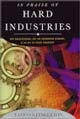
Eamonn Fingleton is the author most recently of In Praise of Hard Industries: Why Manufacturing, Not the Information Economy, Is the Key to Future Prosperity (Houghton Mifflin, 1999).
|
|
Contact Eamonn Fingleton |
|
|
|