|
|
| East Asian Trade and the Future of Economics |
|
Thursday, October 11th, 2001
|
Why watch the global economy from a vantage point in Tokyo? Because Tokyo is where the story is. By Eamonn Fingleton.
TOKYO. As a financial journalist who in a previous life worked for many years in both New York and London, I am often asked why I choose these days to live in Tokyo. I respond with the same sort of bemused impatience Willie Sutton displayed when someone asked why he robbed banks. For Sutton, banks were where the money was. For me, Tokyo is where the story is.
The story is the rise of East Asian economics. And what an epic story it is! Repeatedly written off in the West as no more than a troubling mirage, the East Asian miracle is very real. In fact, the East Asian economic system is a new formulation that is as portentous a break from capitalism as capitalism was from feudalism. In other words, it represents a turning point in economic history. And for me the sense of history-in-the-making is all the greater for the fact while the East Asian system has been consistently denounced by contemporary Western observers as egregiously and heretically dysfunctional, the retrospective record always shows that this strange system outperforms Western capitalism in the long run.
Portending tectonic tensions
One reason why the East Asian system has so completely confounded Western observers is because it turns upside-down many of the most cherished tenets of capitalism. The most notable of these is, of course, capitalism�s view of trade. Whereas advocates of capitalism insist that free trade is the royal road to economic growth, the East Asian system posits the precisely opposite principle of mercantilism as the sine qua non of a successful national growth strategy. Naturally Western economists find this hard to swallow and for decades East Asian nations have found it politic to deny that they practice mercantilism. The fact remains however that this troubling difference portends tectonic East-West tensions down the road as citizens of the Western democracies belatedly come to understand how far East Asia has been deviating all along from Western ideas of both fair trade and of frank international communication.
So much for the East Asian system - but why study it from a vantage point in Tokyo, rather than say Beijing? There is of course no question that when it comes to American press discussions of trade these days, China is a far hotter potato than Japan. But for anyone who cares about the fundamental historic point - the emergence of a new economic system in East Asia - Japan will long remain the main focus of attention. After all, although China has made extraordinary progress in recent years, per-capita income in Japan still runs about thirty times higher than in China. True if China ever comes remotely close to emulating Japan's per capita income, it will tower far above Japan in total output. But for now Japan's total output still runs more than four times that of China and is likely to continue to exceed China�s for decades to come.
Competing where America is not
The reason the press is so focused on China is that imports from that country are now a major job killer in the United States. Meanwhile imports from Japan have virtually ceased to be a political issue. But this is no way gainsays the significance of Japan. Far from suggesting that Japan is less competitive than China, as many commentators imagine, the truth is the opposite. Taking one month with another, Japan enjoys a trade surplus with the United States fully as large as that enjoyed by China. The difference is that whereas China makes products that compete directly with American-made goods, Japan does not. Rather Japan now competes almost entirely in ultra-high-end manufactured products where the United States has either ceased to compete or has never been a player in the first place. In other words, the reason Japanese exports create so few political waves these days is that Japan has now decisively passed the United States in manufacturing excellence. In this sense, for those interested in the story of the clash of systems, Japan's achievement is of vastly greater historic significance than that of China. After all while China's export success can be explained away as merely reflecting low wages, no such easy explanation is possible in Japan's case. For the point is that wages in Japan, as measured at current market exchange rates, now run anything from 15 to 30 percent higher than in the United States.
An economic system that can pay such high wages and can dominate world markets so effortlessly while breaking almost every Western rule of "good economics" is something new and, from the point of view of Western economic and political theory, deeply troubling. This story will run and run - and I intend to stay with it.
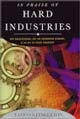
Eamonn Fingleton is the author most recently of In Praise of Hard Industries: Why Manufacturing, Not the Information Economy, Is the Key to Future Prosperity.
|
|
Contact Eamonn Fingleton |
|
|
|