|
|
| Swiss Roll: Having It Both Ways on Globalism |
|
Thursday, October 25th, 2001
|
Switzerland preaches globalism � but practices something else. By Eamonn Fingleton.
Americans have been told for years that globalism is a great idea. The United States should throw its markets wide open to imports from all over the world. It should allow anyone anywhere to invest within its borders � to buy up its land, to fund its government deficits, even to take over its most important corporations and industries.
Few people have been so enthusiastic in their support for this message as the Swiss. In particular Swiss banks are big funders of globalist causes of all sorts, most obviously the effort to break down America�s regulatory control of its own financial system. Meanwhile Swiss multinational corporations have penetrated important sectors of the American economy -- everything from food and pharmaceuticals to advanced engineering. But perhaps the ultimate Swiss contribution to the rise of globalism is the annual Davos economic conference. Organized under the auspices of the Swiss commercial establishment and staged each winter in the Swiss ski resort of Davos, the conference brings together cheer-leaders for globalism from all over the world. Meanwhile anyone who might raise questions about the wisdom of globalism are systematically debarred from participation. Because the conference is attended by virtually everyone who is anyone in corporate America� from Rupert Murdoch to Bill Gates � it has an immense impact on how globalism is perceived at the highest levels in the American establishment.
Swiss globalism: do as I say, not as I do
The strange thing about Swiss globalism is that it is so markedly one-way. The Swiss want America to embrace fullscale globalism. Yet the Swiss themselves have no intention of reciprocating in kind.
Immigration into Switzerland, for instance, is tightly controlled. Guest workers may be welcome for a while in Switzerland � but only so long as they are young and able. Once Switzerland no longer has need of their services, they are packed off back to where they came from.
The Swiss even reserve the right to have it both ways on European trade. While Switzerland has consistently resisted joining the European Union, it has assiduously negotiated favorable trade treaties with Brussels.
Meanwhile foreign entry to the Swiss economy is somehow something that is largely confined to Swiss players. Take the banking system. Whereas Swiss banks are in the forefront in the foreign buy-out of Wall Street (and they would indignantly condemn any American attempt to curtail this buy-out), American banks have never been allowed more than token participation to the Swiss financial system.
Then there is the matter of who is allowed to own Swiss industrial assets. When is the last time you heard of a major Swiss corporation being taken over by an American rival? Whereas the Swiss think it is only right that American corporations should be up for sale to the highest bidder, somehow Swiss companies are rarely if ever sold to foreigners. Perhaps the ultimate demonstration of this principle was in the way that the Swiss authorities handled the recent bankruptcy of Swissair. Whereas Swissair had in the late 1990s bought its way into the airline industries of France and Belgium, there never seemed to be any possibility that anyone from outside Switzerland would have any chance of buying control of Swissair even as that company floundered in bankruptcy. Rather the Swiss government organized an all-Swiss rescue effort in which such upstanding members of Switzerland Inc. as Nestle, Roche, UBS, and Credit Suisse were all pressed into action in contributing to the necessary refinancing of the stricken airline. It is a tribute to the Swiss sense of national purpose that the Bern government could put together such a rescue package at the click of its fingers.
At the end of the day one thing is clear: Switzerland�s one-way concept of globalism hasn�t done it any harm. In fact, at last count Switzerland still presided in its cust0mary position as the world�s richest nation -- with wages at recent exchange rates running 30 percent higher than in the United States.
It is time Americans wondered about Switzerland�s one-way globalism. In a nutshell the question is this: why are the wealthy Swiss so happy to wish on others what they are not prepared to practice themselves?
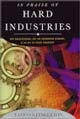
Eamonn Fingleton is the author most recently of In Praise of Hard Industries: Why Manufacturing, Not the Information Economy, Is the Key to Future Prosperity (Houghton Mifflin, 1999).
|
|
Contact Eamonn Fingleton |
|
|
|