|
|
| Greider on America's Part-time Corporate Patriots |
|
Tuesday, November 6th, 2001
|
Author William Greider is a tireless campaigner for cleaner politics. He has just launched a devastating broadside against the towering hypocrisy of America�s globalist elite. By Eamonn Fingleton.
Few critics of globalism are more devastatingly well informed than William Greider. As the author of Who Will Tell the People: The Betrayal of American Democracy, a explosive 1992 account of how corporate money has poisoned American politics, he has been watching the rise of globalism longer and more intently than almost anyone else. But even Greider has rarely thrown a more devastating verbal hand grenade than in a new article just published in the November 14 issue of The Nation.
The article is positioned as a retort to an insinuating question posed by the New York Times in the wake of September 11:"After the Attacks, Which Side Is the Left On?" As Greider points out, instead of instigating a witchhunt on the left, the New York Times might much more usefully have sought evidence of traitors behind the arras in quite a different place �corporate America.
Corporate America�s have-it-both-ways hypocrisy on globalism has rarely been so blatant as in the aftermath of the recent atrocities. Take the American banking industry. When there is money to be made from globalism, no American industry is more immaculately global than the American banking industry. But when it comes time for American banks to seek corporate welfare in Washington (in the form of bailouts for their mistakes in throwing American depositors� money down ratholes in say Argentina or Thailand), suddenly they wrap themselves in the Stars and Stripes.
A stand-out performer in this regard is Citigroup, the financial services behemoth whose most important subsidiary is Citibank. Railing against American banking regulations some years ago, then Citibank boss John Reed went on record saying that the United States is an inappropriate place for a major bank to be based. Never mind that Citibank has more than once been the beneficiary of a federal bailout. Post September 11, Citigroup has been cloaking itself in globalist garb again as it has led the Washington lobbying effort to water new regulations intended to make financial life inconvenient for the world�s terrorists.
Jobs in a global era: Boeing, Boeing, gone
Another interesting case in point is Boeing. Wearing its globalist hat, Boeing has, of course, been a leader in corporate America�s effort to ship jobs and technologies abroad. As quoted by Greider, one of the company�s executives said: "We've got [American] suppliers that we've dealt with for fifty years, and we're asking all of them to offload production to China." Post-September 11, however, Boeing has rediscovered its American roots. The reason: the crisis has sparked a new round of U.S. spending on military planes.
Few corporate hypocrites play the globalist/patriotic switch more successfully than American International Group, the new York-based insurance giant. AIG has its snout in various questionable money-making troughs in Japan and China and as an obvious quid pro quo has been one of the most shameless compradors pushing East Asia�s one-way free-trade agenda in the United States. Post September 11, however, AIG has been getting in touch with its �American� side as it shakes down Washington for help with its World Trade Center insurance liabilities.
To read Greider's article, follow this link:
http://www.thenation.com/doc.mhtml?i=20011112&s=greider
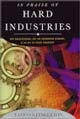
Eamonn Fingleton is the author most recently of In Praise of Hard Industries: Why Manufacturing, Not the Information Economy, Is the Key to Future Prosperity (Houghton Mifflin, 1999).
|
|
Contact Eamonn Fingleton |
|
|
|