|
|
| The Fate of American Steel |
|
Friday, December 28th, 2001
|
Barring resolute government action, much of what is left of the American steel industry will soon disappear. �Good riddance,� say doctrinaire free traders. Their attitude is a historic mistake. By Eamonn Fingleton.
Barring a miracle, the LTV steel company will disappear forever in February. It has already stopped making steel but is keeping its furnaces in a state of suspended animation for a few more weeks as it pursues fading hopes of a last-ditch rescue. Barring a major U-turn by the Bush administration on trade policy, LTV�s prospects of ever restarting its furnaces look grim.
LTV, the holding company for Jones and Laughlin Steel, was America�s third largest integrated producer of steel and back in its glory days in the 1960s it ranked as high as 14th in the Fortune 500. Its plight is just the most acute of dozens of once-great companies in an industry that has been drowning in red ink for decades.
The problems are much more serious for integrated producers like LTV than for the so-called mini-mill companies such as Nucor, which have expanded rapidly in the last thirty years. Whereas the integrated mills make steel from iron ore, the mini-mills work mainly with scrap. The integrated mills have suffered disproportionately from foreign steel producers� increasingly massive dumping of steel in the American market. After the flood of below-cost foreign steel reached torrential proportions during the East Asian economic crisis of 1998, American steel companies one by one entered Chapter 11 bankruptcy. Now for many of them the only hope is that the Bush administration will undergo something of a Pauline conversion on trade.
The misconceptions that are killing American steel
Naturally the free trade press, led by the Washington Post, is loudly warning Bush against any going back on his free trade principles. If the free trade commentators are to believed, America�s big integrated steel companies really do not matter any more. Any help to them, it is said, would be a net drag on the U.S. economy.
Nonsense. The idea that the integrated steel industry is dispensible is based on a series of historic misconceptions.
Free trade advocates suggest that the integrated steel makers can safely be left to die because the mini-mills will survive and thus the United States will still be left with plenty of steel-making capacity. But this overlooks the fact that not all steel is created equal. In reality there are many types of steel. As a general rule, mini-mills cannot efficiently produce many higher grades such as the sheet steels used in car bodies and domestic appliances. Allowing the integrated mills to die is tantamount therefore to leaving key American industries dependent on foreign suppliers for a fundamental material. The implications are large not only for the economy but for the nation�s national security.
Free traders argue that helping the integrated mills will raise the price of steel in the United States and thus penalize such crucial steel users as the U.S. auto industry. Again, this argument is disingenuous. Remember that the cause of the steel industry�s present problems is dumping by foreign suppliers. Essentially foreign suppliers are selling in the American market at prices significantly below what they charge in their protected home markets. Thus to the extent that remedial action for the American steel industry raises steel prices in the U.S., this would simply mean that American steel users were being asked to pay the same prices their foreign competitors are already paying. Steel users can hardly object to that. This is, of course, not to deny that the U.S. auto industry has problems of its own. Rather the point is that the U.S. auto industry should not try to solve its problems at the expense of the U.S. steel industry. (As part of any comprehensive effort to help the auto industry, Washington should break down foreign barriers to America�s car exports and should in particular address the notorious barriers that to this day keep the Japanese car almost completely shut to imports.) In any case, the
Perhaps the biggest � and most dangerous � media misconception about the American steel industry is that it deserves its fate. In this view, the troubled companies are �dinosaurs� that have only themselves to blame for failing to invest in modern processes. This is the unkindest cut of all. Certainly some of the endangered companies are fundamentally weak � but the root cause of their weakness is Washington�s consistently disastrous trade policies. For thirty years, the U.S. steel industry has been exposed to increasingly debilitating foreign dumping. The result has been decades of depressed � or non-existent � profits. To say the least, there has been little money in the kitty to undertake modernization.
What should the Bush administration do? There is talk of imposing temporary tariffs on steel imports. That would certainly be a help but in all likelihood it would offer only a temporary respite. In the end what is needed is not a Band-aid solution but a fullscale revolution in economic philosophy. Free trade has proved a disaster for the United States and there will be no sustainable recovery in American manufacturing until Washington frankly recognizes that it is time for an entirely new approach to trade.
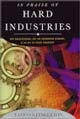
Eamonn Fingleton is the author most recently of In Praise of Hard Industries: Why Manufacturing, Not the Information Economy, Is the Key to Future Prosperity (Houghton Mifflin, 1999).
|
|
Contact Eamonn Fingleton |
|
|
|