|
|
| The Truth about Japan and China |
|
Monday, February 4th, 2002
|
American policy-makers think that Japan and China will cancel one another out in the world power game. It is time to think again. By Eamonn Fingleton.
As what remains of America�s manufacturing prowess drains away to East Asia, American policy makers persist in enormous complacency. They believe that the loss of American manufacturing to East Asia has few if any negative implications for American power. One key reason for their complacency is an assumption that mutual antagonism between Japan and China will ensure that these nations cancel each other out in the world power game.
It is time this complacency was challenged. For far from seeking to break one another�s rice bowls, the truth is that the two major East Asian manufacturing powerhouses are clearly engaged in a closely cooperative and mutually beneficial economic relationship.
The extraordinary extent of Japan's cooperation with China
Just how close the relationship is has been highlighted in an article in the prestigious journal International Security. The article, written by Eric Heginbotham and Richard J. Samuels, has gone largely unnoticed outside scholarly circles but it is crucial reading for any serious observer of East Asian economics and politics. The following points are drawn largely from Heginbotham and Samuels�s analysis:
1. Japan is a major direct investor in China and has transferred large amounts of relatively advanced technology to Chinese factories. The most obvious area of technology transfer is semiconductors, an industry in which, with Japanese help, China is now becoming a world contender.
2. After the Tienanmen Square massacre, the Japanese went to extraordinary lengths to minimize the rupture between China and the West. Within months of the atrocity, Japanese business leaders returned to China to reaffirm the importance of Japan-China relations. More significantly, then Japanese Finance Minister Ryutaro Hashimoto was the first Group of Seven finance minister to visit China after the massacre. Moreover Japanese officials argued at the Asian Development Bank for the early lifting of Western sanctions against China.
3. By the late 1990s Japan was China�s largest trading partner and China was Japan's second largest trading partner after the United States. That China enjoys special trading status with Japan is obvious when you realize that China is one of only a handful of nations with which Japan has recurring trade deficits.
4. More Japanese development aid goes to China than to any nation. This is not an insignificant fact given that Japan long ago passed the United States as the world�s largest aid donor. Japan rapidly increased its aid to China in the 1990s.
5. In September 1997, Japan broke ranks with the United States and the European Union to help China�s bid to join the World Trade Organization. In so doing, it undercut the West�s bargaining position and thus greatly complicated the West�s effort to extract realistic guarantees that China will abide by the spirit of WTO rules.
As Heginbotham and Samuels point out, all this is the more puzzling when considered in the context of Japan's traditionally fraught economic relations with the West.
Next week I will offer an analysis of why these nations have become so closely intertwined.
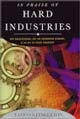
Eamonn Fingleton is the author most recently of In Praise of Hard Industries: Why Manufacturing, Not the Information Economy, Is the Key to Future Prosperity (Houghton Mifflin, 1999).
|
|
Contact Eamonn Fingleton |
|
|
|