|
|
| Japan's "Collapse": When Will the Scales Fall from America's Eyes? |
|
Friday, February 15th, 2002
|
Don�t kick a man when he is down. That is the gentlemanly principle that has guided Washington�s �softly, softly� approach to Japan's trade barriers in recent years. In reality, however, the Japanese economy�s �imminent collapse� is a media myth. Luckily even the most absurd media misperceptions are corrected in time. We may be close to a turning point in perceptions of Japan. By Eamonn Fingleton.
TOKYO. To see what is in store for the Japanese economy these days, all you need do is check out what the most prominent stock analysts here are saying � and then bet on exactly the opposite!
The simple fact is that Tokyo-based stock analysts are notorious for getting it wrong � even more notorious indeed than their hapless counterparts in New York and London (although admittedly some of the latter should be considered for �honorable� mention, given how enthusiastically they bulled so many worthless Internet stocks in the late 1990s).
Tokyo analysts are never wronger than when they are absolutely unanimous. Remember how wrong they were in the notorious bubble years of the late 1980s. Although to some of us at that time, it was obvious that Japan was headed for the mother of all financial crashes (for my predictions see in particular the September 1987 and February 1989 issues of Euromoney magazine), the analysts saw things differently. In late 1989, within weeks of the beginning of the crash, Tokyo-based analysts reached an all-time frenzy of bullishness. Spouting a whole lexicon of pseudo-sophisticated financial mumbo-jumbo, they relentlessly peddled Japanese stocks to anyone who would listen. In blatant contradiction of the historic record, they asserted, for instance, that real estate values in Tokyo �never fall�� thus the Japanese banks� big real estate loans were supposedly perfectly safe. Unfortunately far too many Western fund managers were taken in by this garbage and the result was that in short order countless billions of dollars of American and European pension and life insurance money went up in smoke.
Bushies bamboozled by the myth of �collapsing Japan�
For those of us who worry about America�s trade problems, Tokyo�s stock analyst community deserves special scrutiny. Why? Because a handful of widely quoted analysts working for American and European securities firms in Tokyo has played a decisive role in creating the myth of Japan's endless �slump� � and this myth in turn has enabled Japan to remain consistently below Washington�s radar on trade for the best part of a decade now. The Bush administration�s trade representatives believe that poor Japan cannot import any more than it currently is � after all, the Japanese economy is supposed to be a basket case in which consumers are so shell-shocked that they have mounted a crippling consumption �strike.�
In reality, as regular readers of this column know, despite Japan�s banking problems (which I for one predicted as far back as 1987), the Japanese economy generally remains one of the world�s most successful. To take just one example of a crucial fact that the �collapsing Japan� crowd never mentions, wages in Japan remain among the highest in the world � higher indeed than those in the United States. Meanwhile Japanese consumers are palpably among the richest in the world � richer indeed in many ways than their American counterparts (as first-time American visitors to Japan are constantly amazed to discover). This is apparent in everything from their world-beating life expectancy to the ultra-high levels of household ownership of the latest electronic gadgets. And, of course, Japan's external position is one of the strongest of any nation in history (Japan's capital exports, for instance, are now in real terms the largest of any nation since the heyday of American leadership of the world economy in the 1950s).
One thing is clear: in all the time since the Tokyo financial crash of the early 1990s, the analysts have never been more unified in their gloomy outlook than today. Therein lies a clue: as the ultimate contrary indicator, the analysts are now unconsciously signalling that we are close to a major economic and financial turning point. Earlier this month they talked Japanese stocks down to the lowest levels in more than a decade. More important they talked the Japanese yen to its lowest levels since the Asian financial crisis of 1998. While it would be a brave man who would predict that Japanese stocks are now on the brink of a roaring new bull market (after all Japan is not now � and never has been � a capitalist economy), they are certainly better value today (with the Nikkei index at 10,048) than they were when they were being hyped to the skies in the late 1980s. As for the Japanese yen, the long-term outlook is quite clear. Although the yen may well continue to languish at low levels for another month or two, a year from now it will be considerably higher than today�s level of �132 to the dollar. And three years from now, it will have appreciated so far that we will find it hard to believe it ever went as low as today�s rate.
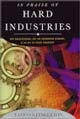
Eamonn Fingleton is the author most recently of In Praise of Hard Industries: Why Manufacturing, Not the Information Economy, Is the Key to Future Prosperity (Houghton Mifflin, 1999).
|
|
Contact Eamonn Fingleton |
|
|
|