|
|
| Educating W: The Pitfalls of East Asian Trade Diplomacy |
|
Thursday, February 21st, 2002
|
George W. Bush does not understand Japan. That is why his elaborate courting of Japan's hirsute Prime Minister this week was such a farce. By Eamonn Fingleton.
TOKYO. Despite decades of cajoling from Washington, Japan remains one of the world�s most difficult markets for American exporters. It is a particularly hostile place for any American company wanting to sell high-tech goods � the very products the U.S. economy depends on if it is to maintain and enhance its position in the world power league. Thus when President George W. Bush visited Tokyo earlier this week, he had a golden opportunity to do something useful to address America�s disastrous trade problem. But instead of talking tough to Japan's mercantilist bureaucrats and protectionist business executives, Bush consistently avoided the subject of trade and instead wasted most of his time making nice to Japan's latest puppet Prime Minister Junichiro Koizumi.
As far as Bush is concerned, of course, his �softly, softly� approach was an exercise in intelligent self-interest. By bolstering Koizumi, Bush assumed he was advancing the prospects of fundamental economic reform in Japan. And reform in turn, he assumes, will supposedly result in an open Japanese economy in which American exporters will at last be allowed to compete on a fair footing.
For anyone who actually knows Japan, every link in this chain of logic is an absurd misconception. For a start, there is the question of who Koizumi really is. To be sure Koizumi comes across as more of a laid-back kind of guy than most of his predecessors. But just because he has sported a modified Beatles hairdo since the 1960s does not make him Western in spirit, let alone a committed advocate of Western economic values. There is nothing in Koizumi�s record to indicate that his commitment to Western values is more than lip service. In essence there is a Catch 22 in Japanese politics that automatically precludes the emergence of any truly sincere advocate of Western values: basically anyone who might aspire to conduct real reform would automatically be seen as a destabilizing force to be thwarted at every turn in Japan's comprehensively gerrymandered political system. Thus he would not stand a snowball�s chance in hell of achieving significant elected office.
In any case there is an even more fundamental issue here: elected political officials are poor relations in the Japanese system. Few of them ever rise beyond the status of being mouthpieces for the bureaucracy. They don�t have the power to change anything (except maybe their hairdos). Power lies with the bureaucrats and, just as turkeys don�t vote for Christmas, the bureaucrats are unlikely to implement any political reforms that might undermine their own power.
Theater of the absurd: the hawk and the Milquetoast
In essence Bush was an unwitting participant in an elaborate exercise in theater of the absurd. And perhaps no part of the whole encounter was more absurd than Bush�s parting impression that the Japanese people in general and Koizumi in particular are firm allies in America�s campaign against the �axis of evil.� For both altruistic and self-serving reasons, Japan is dead set against the Bush administration�s reported plan to attack Iraq. That Koizumi would sound supportive of Bush�s hawkishness was, of course, par for the course. It was in line with Japan's long-time policy of trying to avoid the No word in negotiating with the United States. But, as Asians understand far better than Americans, words are not actions. It is one thing for Koizumi to make the right noises in support of Bush�s future military plans; it is entirely something else for Koizumi to deliver any practical help in support of such plans. That goes even for the sort of monetary subventions Japan eventually was forced to provide in the case of the Gulf War in 1991. If Bush presses ahead with a war against Iraq, he will find that when he looks for real practical help from Tokyo, his �friend� Koizumi will be nowhere to be found. Assuming that Koizumi survives until then, the shadowy men who really run Japan � the top bureaucrats and their clients in big business � will choose that moment to arrange a political �crisis� in which Koizumi is unceremoniously bundled off the stage. A �leaderless� Japan will then try as far as possible to wriggle out of any promises Bush imagines he received from Koizumi.
As usual Japan will not actually have said No. But it won�t have said Yes either. This is diplomacy, Japan-style � and it is about time American leaders understood how it works.
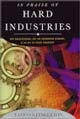
Eamonn Fingleton is the author most recently of In Praise of Hard Industries: Why Manufacturing, Not the Information Economy, Is the Key to Future Prosperity (Houghton Mifflin, 1999).
|
|
Contact Eamonn Fingleton |
|
|
|