|
|
| Steel is No Sunset Industry |
|
Tuesday, March 26th, 2002
|
==================================================
NOTE: Eamonn Fingleton sets out on a trip to the United States and Europe on March 28. Normal service will be resumed here on his return to Tokyo in mid-April. EF
==================================================
Free traders wonder why the U.S. steel industry is worth fighting for. This article, which I recently published in the editorial pages of the International Herald Tribune, attempts to summarize the reasons. EF
Steel is No Sunset Industry
By Eamonn Fingleton
TOKYO. Whatever you make of President Bush's plan to impose tariffs on foreign steel, one thing is undeniable: steel is a crucial industry. No amount of trendy econobabble about the shift to a postindustrial society should be allowed to obscure this fact.
Although steel has long been derided in the English-speaking world as a "Sunset industry,"this image is belied by a continuing steady increase in the world's steel consumption. Even in the new millennium, the fact is that the more steel a nation produces the higher it is likely to rank in the world wages league table.
According to the Brussels-based International Iron and Steel Institute, the global steel industry's output of 824 million tons last year represented a respectable 8.4 percent increase on 1998.
Admittedly the strongest growth is concentrated in some of the fastest developing Third World economies. In China, for instance, steel output has increased by more than 23 percent in the last three years.
That said, the industry remains a mainstay of some of the world's richest economies, most notably Japan and Germany. In Japan, for instance, steel output has risen more than 10 percent in the last three years. Among other superrich nations, Austria and Sweden have also been notable for their rising steel output in recent years.
Perhaps the most striking example of the correlation between steel and wealth is Luxembourg. It consistently ranks among the five richest nations in per-capita income. By no coincidence, steel accounts for nearly one quarter of the tiny principality's total exports.
Strong and easy to work, steel is one of mankind's most vital materials
The steel industry's continuing economic importance is driven by a fundamental, if often overlooked, fact: steel is a great material. It is notably easy to work and shape. Its hardness, tensile strength, electrical conductivity, and thermal properties make it useful in a huge variety of applications crucial to modern advanced economies. Best of all steel is extremely inexpensive thanks to the abundance of iron ore in many parts of the world. (Constituting 5.1 percent of the earth's crust, iron ore is the fourth most abundant material after oxygen, silicon , and aluminum.)
Ironically the industry's image of stagnation is the flip side of its greatest success: its spectacular progress in raising labor productivity over the years. The key to this progress has been heavy investment in new production technologies. As the economic commentator Robert Kuttner has pointed out, steel is a classic example of a supposed sunset industry that in reality boasts some of the most advanced technologies. Because most advanced companies in the industry have increased productivity so fast, they have had little choice but to cut their labor forces progressively over the years. In most other industries, job cuts are synonymous with decline but in steel that logic does not follow.
Moreover the industry's detractors have missed the fact that there are many kinds of steel. While some kinds such as girders for the construction industry are relatively easy for even a poor nation to produce, certain high-tech steels require both highly capital-intensive and knowhow-intensive production processes. The rising importance of such high-tech steels helps explain the continuing success of such ultra-high wage nations as Japan, Austria, Luxembourg, and Sweden in the industry.
Perhaps the most startling evidence of how high-tech the steel industry has become is in the many key steel alloys used in defense applications. Producing such alloys in many cases is so specialized that only a few companies anywhere in the world can make them. Take, for instance, various specially coated alloy steels used in jet engine combustion chambers. Where such steels are subjected to small-bore drilling (typically to accommodate fasteners or cooling systems), the requisite engineering technology is no longer available in the United States. Instead the United States must go to Japan or Europe for such materials.
No wonder Nippon Steel president Akira Chihaya commented a few years ago: "Steel has been and will remain a basic material in our lives. The steel industry is not only alive and well in the information society but can be expected to continue expanding.?E
In a word steel is an industry worth fighting for. The battle for the future of the steel industry will be long and hard fought.
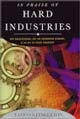
Eamonn Fingleton is the author most recently of In Praise of Hard Industries: Why Manufacturing, Not the Information Economy, Is the Key to Future Prosperity (Houghton Mifflin, 1999).
|
|
Contact Eamonn Fingleton |
|
|
|