|
|
| The CELI Debate: A Note on the Event's (Rather Lengthy) Genesis |
|
Tuesday, August 19th, 2003
|
I travel to Washington in September to participate in a public debate on the state of the Japanese economy. I will argue for the proposition "That Japan did NOT suffer a lost decade in the 1990s" and Jesper Koll, a top analyst at the Tokyo branch of Merrill Lynch, will take the other side. The event is being organized by the Congressional Economic Leadership Institute and will be held on September 10. This note provides some background on the event. EF
The idea for a debate on the Japanese economy is mine and I first proposed it as far back as March 1999. So why has it taken so long to come to fruition? Why indeed.
The idea came to me after my analysis of the Japanese economy was subjected to an extraordinary Internet-based campaign of misrepresentation by several executives of the Tokyo securities industry. The campaign had been led by Peter Tasker, then employed at Dresdner Kleinwort Benson's Tokyo branch as perhaps the most famous securities analyst in Japan (he had been named several times as Japan's top analyst by the Nihon Keizai Shimbun). Among his most prominent supporters in the campaign was Alexander Kinmont, also a well-known Tokyo-based analyst and then employed at Morgan Stanley's Tokyo branch. In combination with several allies, Tasker and Kinmont had posted more than two hundred commentaries on the Internet attempting to rebut my contrarian analysis of the Japanese economy. These commentaries consistently -- and often grossly -- misrepresented my work and ideas.
My response was to propose a debate -- or rather two debates. I would meet each of my principal opponents in separate debates, one in Tokyo and the other in Washington. I made the offer in the Dead Fukuzawa Society, a Japan-focused Internet chat room in which Tasker and Kinmont were leading participants.
In the event, neither Tasker nor Kinmont wanted to debate. Tasker's response, made in the same chat room, was a counterproposal. Instead of a one-on-one debate, he opted for the rather less focused format of a panel discussion -- and a very special sort of panel discussion at that. He would participate only if he was flanked on the panel by several Japanese economists and then only if the entire proceedings were conducted in the Japanese language. Kinmont responded in similar terms -- a panel discussion in the Japanese language in which he would be flanked by Japanese economists.
So much for my hopes of a clear cut one-on-one debate. The Japanese-only provision, moreover, ruled out any prospect of a Washington encounter. In fact even in Tokyo, my opponents' insistence on a Japanese-only discussion would have crippled the event: the reason is that top American executives in Tokyo -- the people in the Tokyo foreign community who have most influence on American policy -- are generally short-stay people who, with few exceptions, never learn more than a few words of the Japanese language.
Tasker and Kinmont never explained why the discussion had to be in Japanese. It was a significant omission. After all in their previous Internet campaign, they had been perfectly satisfied to convey their views in English -- a not unnatural linguistic choice as they are both British!
In the end they both withdrew even their offer to meet me in a Japanese-language event. But the idea of a debate was revived in 2001 after I told a prominent foreign correspondent of the previous history. On his encouragement, I again extended an invitation to Tasker and Kinmont. Neither responded. This time I extended an invitation also to a few other prominent foreign analysts. Although neither Kenneth Courtis nor Robert Feldman responded, we did find a taker in Jesper Koll, an analyst at Merrill Lynch. In fairness to Jesper Koll, it ought to be pointed out that he had nothing to do with the original Internet campaign that had prompted the debate proposal in the first place. Neither had Courtis or Feldman.
The next problem was to find a venue. The first choice, the Foreign Correspondents' Club of Japan, raised various procedural difficulties and in the end refused to authorize a straight one-on-one debate. The second choice, the American Chamber of Commerce in Japan, at first accepted to do the event but then, after three former presidents of the chamber intervened, withdrew its offer. The chamber's grounds for blocking the debate have remained unclear. Luckily, however, the Congressional Economic Leadership Institute accepted to host the event and I am very grateful to Jesper Koll for sparing the time to make the trip to Washington to join me for what I hope will be an enlightening occasion.
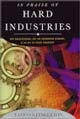
Eamonn Fingleton is the author most recently of In Praise of Hard Industries: Why Manufacturing, Not the Information Economy, Is the Key to Future Prosperity (Houghton Mifflin, 1999).
|
|
Contact Eamonn Fingleton |
|
|
|