|
|
| Amazon and the truth about East Asian economics |
|
Friday, November 7th, 2003
|
Writers who write the truth about East Asian economics get used to being falsely accused of racism. But even by the normal standards of East Asian studies, the outright mendacity displayed in the review I attach below is a classic. The review -- of my new book, Unsustainable: How Economic Dogma Is Destroying American Prosperity -- has been posted in the customer review section of Amazon.com. The reviewer, someone called Sally Mowbray, denounces the book as racist and purports to back up the charge with some persuasive quotes. She has me not only describing the Japanese as "crafty" but referring to other East Asian peoples as "Orientals." Disreputable words indeed. The problem is that they are not my words. Rather they are Ms. Mowbray's. In an effort to damage my work she has resorted to outright fabrication to provide "evidence" against me.
As any bona fide reader of my work will testify, my language in discussing ethnic and cultural issues is consistently moderate and respectful. In truth I have no issue with the Japanese people -- or with any other people. My issue is with the governments of the East Asian region -- governments which have consistently oppressed their own people (albeit this is not well understood abroad in the case of Japan). These governments moreover have consistently misled the rest of the world about the nature of their economic policies (particularly their trade policies, which of course are crucial to my analysis). In a free world I am surely entitled to criticize East Asian trade policies without facing charges of racism (just as commentators who criticized the Soviet government during the Cold War were not accused of harboring ill will towards the Russian people).
That my work passes the highest tests of decency is surely objectively obvious in the fact that it has been endorsed by such conscientious opinion leaders as J.K. Galbraith, James Fallows, Ralph Nader, Chalmers Johnson, and Pat Choate.
I would add that in every other aspect also the Mowbray review is a classic exercise in mendacity. Take her statement of my main theme. Mowbray to the contrary, the book does not advocate the "superiority of giant old-fashioned heavy industry." Rather it presses the case for something crucially different -- advanced manufacturing, by which is meant supermodern manufacturing that is both highly capital-intensive and knowhow-intensive. As I point out, such manufacturing is often based on state-of-the-art miniaturization and there is certainly nothing obsolete about it. My argument -- which has gone utterly unchallenged by my putative intellectual opponents in the globalist lobby -- is that advanced manufacturing creates jobs that are generally more competitive and productive than jobs in the labor-intensive advanced services on which America has been staking its future. Mowbray is equally misleading about the book's conclusions. The book does not advocate any sort of government industrial "planning," let alone the fascist variety.
Mowbray's suggestion that the book is "dated" and cliche-ridden is almost as damaging as her charge of racism. Readers of books on America's economic problems can be forgiven for being unwilling to buy another cliche-ridden analysis. The market is already flooded with them, most of them based on a narrow gauge view innocent of any serious understanding of the world beyond America's borders. No one who has read Unsustainable can deny that its case is both original and based on a deep knowledge of the world economy.
Then there is Mowbray's use of words like "creepy" to describe my analysis. Again a scarcely concealed ad hominem attack. If my analysis is creepy why not illustrate the point with an example? In reality in a pattern that serious writers on East Asian economics have become familiar Mowbray is careful not to cite examples. The truth is that even the most controversial aspect of my analysis -- the suggestion that Japan is deliberately exaggerating its economic problems -- is one that immediately strikes a chord with many top bankers and diplomats who know the Japanese economic system well.
As for my facts, Mowbray suggests they "don't check out." Again she cites no examples. If there really were any material inaccuracies in the book she would surely have delightedly lit upon them and quoted verbatim whole sentences, if not paragraphs, in substantiation. In reality the key thing about this review, as with other revisionist-bashing reviews over the years, is the reviewer's utter refusal to address the substance of my argument.
The most interesting thing about Mowbray's review is its timing. Mowbray's review was posted on October 26 -- before the book's publication date and in good time to do maximum damage to the book's November launch. The review is likely to be particularly damaging in dissuading television bookers from arranging interviews with me. It will also be effective in dissuading newspaper books editors from putting the book out for review. The review will also be used by people who want to block me getting my message out in American universities and other key forums. After all Amazon is a reputable organization and people naturally assume the company did due diligence before posting such damaging comments on my work.
The question is how could Mowbray have been so early to hear of the book's impending launch. After all, Mowbray is not known to me, nor as far as I can tell to anyone in my circle. (An Internet search suggests that she is a veteran expert on ikebana, the Japanese art of flower arrangement.) She can hardly have been alerted by publicity because -- again so far as I am aware -- the book has not yet had any.
I would add that �t is equally a mystery how the writers of three other customer reviews on-line at Amazon today became aware of the book so soon. I have never met any of them and with one exception had never even heard of them before. It is interesting to note that the other negative reviewers, in common with Mowbray, fail to quote any passages in substantiating charges of inaccuracies and flawed logic. In truth their reviews are almost as mendacious as Mowbray's.
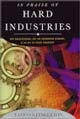
All this is the more significant for the fact that this is not the first time the launch of a book of mine has been marred by a blatantly mendacious, suspiciously early customer review at Amazon. The same thing happened with my 1999 book, In Praise of Hard Industries. Contrary to its normal practice, Amazon deleted this review from its system about two years ago. It is a pity because, with the benefit of hindsight, the misleading -- for want of a better word --effect of the review had become rather obvious by 2001.
I should be angry at all this. In reality I am not. After eighteen years of reporting from Japan, I have become inured to the fact there is no fraudulent charge too low for the globalist lobby to hurl in attempting to block honest reports of the Japanese economic system from reaching the American public. It should be added that the globalists have resorted to similar tactics in trying to discredit the work of several of my intellectual allies, most notably recently Ivan P. Hall. Their earlier victims have included James Fallows, Pat Choate, and Chalmers Johnson.
In a backhanded way, the globalists' resort to outright fabrication could hardly have paid the Japan revisionists' work a higher compliment. For the only conclusion a sophisticated observer can draw is that our work simply cannot be challenged on its own merits.
In another way too, the recent spate of negative reviews at Amazon is of help to me. The point is that it powerfully substantiates a crucial element in my case about the Japanese economic system. I have argued for years that dupes and fakes in the globalist lobby in the United States have greatly aided Japanese officials in disseminating highly exaggerated and misleading accounts of the Japanese economy's troubles in recent years. (Such accounts have been encouraged by Tokyo because they have been effective in dissuading American trade negotiators from pressing for opening of Japanese markets.) As few of my readers have ever visited Japan, it is difficult for them independently to verify the strength of my case. In particular they would be forgiven for doubting suggestions that the misunderstandings about the Japanese economy result from a deliberate exercise in mendacity on the part of key friends of Japan in the United States. Now my readers need doubt no longer. All they need do is read Unsustainable in the light of the Amazon critics' comments.
Why would do defenders of the Japanese system's honor stoop so low? Why indeed.
AMAZON CUSTOMER REVIEW OF UNSUSTAINABLE
1 of 1 people found the following review helpful:
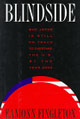
Racist Japan-Bashing Buchananite Garbage, October 26, 2003 Reviewer: Sally Mowbray from Portland, OR USA Eamonn Fingleton is not progressive at all. This book is just a rehash of his book In Praise of Hard Industries, in which he repeated every dated Pat Buchanan cliche about the superiority of giant old-fashioned heavy industry. What is even worse is, he blames our losing these industries on the "crafty" Japanese and the other inscrutable stereotyped "Orientals." He wrote a book in the 1990s subtitled "Why Japan Is Still on Track to Overtake the U.S. by the Year 2000," which as far as I am concerned ends his claim to be a serious thinker about these issues. He is an open admirer of fascist-style government industrial planning and thinks the US has "too much freedom and individualism." A creepy and discredited writer with facts that don't check out and loads of conspiracy theory.
|
|
Contact Eamonn Fingleton |
|
|
|