|
|
| A Crimson Face at the Harvard Business School |
|
Thursday, May 17th, 2001
|
Michael Porter's new look at Japanese competiveness is a classic case of what used to be known in the computer industry as GIGO -- garbage in, garbage out. By Eamonn Fingleton.
TOKYO. One reason Americans aren�t more alarmed by the U.S. trade problem is that they have been repeatedly assured that the United States has staged a stirring renaissance in high-tech manufacturing. Indeed, according to many seemingly authoritative sources, the United States has dramatically turned the tables on a struggling Japan � so much so that it has now re-established its former position as the undisputed leader in dozens of key areas of advanced manufacturing. Unfortunately the story of an American manufacturing renaissance is a media myth.
History will record that few American opinion makers have been so egregiously blindsided by this myth as Harvard Business School professor Michael E. Porter. Best known as the author of the 1990 best seller, The Competitive Advantage of Nations, Porter has returned to the theme of national competitiveness in his latest book, Can Japan Compete?.
From start to finish, the book is an absurd misreading of America�s most formidable competitor. Not the least absurd aspect of the book is the title. After all how uncompetitive can a nation be if it boasts trade surpluses running in excess of $90 billion a year? As if Japan's huge surpluses were not enough, the ultimate evidence of how strong Japan's industrial base is is that, even at today�s low exchange rate for the yen, Japanese wages are about 10 to 15 percent higher than American levels. Moreover Japan consistently maintains some of the lowest unemployment rates in the world. According to the latest edition of OECD in Figures, measured on an apples-to-apples basis, only five of the world�s 29 most advanced nations had lower unemployment rates recently than Japan.
Recycling press myths: a catalog of errors
Writing in collaboration with Hirotaka Takeuchi and Mariko Sakakibara, Porter gives short shrift to such facts. Nowhere does he mention, for instance, that, by dint of superior competitiveness, Japan long ago passed the United States in the world wages league table. Instead he prefers to recycle countless popular canards about the supposed failures and shortcomings of the Japanese economy in recent years. Most of these are culled from the American business press. Unbeknownst to Porter, however, the American business press�s coverage of Japan in recent years has been abysmally ideological. American correspondents can�t resist portraying as �dysfunctional� any aspect of Japanese economic behavior that does not conform to textbook prescriptions of free-market perfection.
Here are just a few of Porter�s most obvious errors:
Porter whopper 1: Credit is �scarce� in Japan.
Fact: Despite various much publicized problems in the Japanese banking industry, credit is more plentiful in Japan than in probably any other economy in world history. With just 2 percent of the world�s population, Japan produces nearly one-third of all the world�s new savings each year�and most of these savings are invested domestically within the Japanese economy.
Porter whopper 2: Japan is in a �seemingly endless slump.�
Fact: In the last decade there has been only one year � 1998 � when Japanese GDP fell. What the American press describes as the �Japanese slump� is merely a period of relatively slow growth. The slump word has been embraced by American news correspondents as a way of hyping their reports and thereby boosting their chances of getting on Page One.
Porter whopper 3: �Japan is no longer the leader in semiconductors� the United States has supplanted it.�
Fact: This statement is based on notoriously misleading statistics supplied by the consulting firm Dataquest. Dataquest has long used a functionally mendacious definition in calculating national shares in the semiconductor industry. For Dataquest purposes, any semiconductor made anywhere in the world that is sold under an American brandname is counted as �American.� Thus Intel Corporation�s large production of chips in offshore factories in Ireland and Israel is counted as �American.� Even more egregiously, huge quantities of chips outsourced by American companies from Japanese competitors are counted as American! The same goes for literally billions of chips made in Korea, Taiwan, and Singapore. Why does Dataquest use such a controversial definition of �American�? Why indeed. This definition was originally suggested by Japan's Ministry of International Trade and Industry during the bitter U.S.-Japan semiconductor trade negotiations of the 1980s. The MITI�s idea was to make American �production� look as a large as possible and thereby hose down U.S. Congressmen worried about the hollowing out of American industry. From the MITI�s point of view, the definition also had the highly welcome side-effect of greatly inflating Japan's apparent imports of American chips.
Porter whopper 4: Harley-Davidson has faced down Japanese competition to �come back with a vengeance� in the world motorcycle industry.
Fact: Far from demonstrating the strength of the American economy, Harley-Davidson�s turnaround speaks to America�s weaknesses. The untold story here is that after Harley-Davidson suffered a near-death experience at the hands of the Japanese in the 1980s, it sued for peace and settled on Japan's terms. Basically it agreed to source many of its key components from its once hated Japanese rivals. Meanwhile it shut down many of its own component-making operations and abandoned long-standing American suppliers. Thousands of American jobs were lost and the result is that, judged by its most advanced manufacturing content, the supposedly all-American �hog� is today little more than a Honda in drag. This deal was an early example of corporate Japan's new kyosei policy of sparing American competitors from total extinction. The term translates as �peaceful coexistence� and the policy, which was first publicly acknowledged in July 1992, is aimed at maximizing Japan's economic advantage while minimizing political friction in the United States. In a typical kyosei deal, a defeated American company undertakes to buy its key components, materials, and machines from Japan. In return the Japanese back off from their previous �take-no-prisoners� approach and cut the American company some slack in recovering lost market share.
Neat, plausible � and entirely wrongheaded
Countless other examples could be cited of the extraordinary superficiality of Porter�s research. But let�s address the substance of his analysis. Porter�s basic proposition is that various long-time Japan watchers are wrong to suggest that government regulation has helped build the Japanese economy. Far from producing prosperity, government intervention, in Porter�s view, has greatly undermined Japan�s overall competitiveness. As proof, he points to a perceived dichotomy in performance between lightly regulated and heavily regulated industries. Industries deemed by Porter to be lightly regulated just happen also to be some of Japan's most conspicuous exporters. Those he deems to be heavily regulated � which include large swathes of the domestic economy � are found to be largely or totally �uncompetitive.� All this is very neat. Certainly it sounds plausible to anyone whose understanding of Japan is limited to reading the American press. And, of course, it meshes beautifully with the academic chop logic every American economics student reads in college textbooks. But it is a maddeningly simplistic, almost entirely wrongheaded, view of a real-world economy that has always baffled Western economic theorists. Certainly the book misses everything of significance that American policy-makers should be concerned about.
For a start it completely ignores the way that Japanese regulators by curbing imports have provided vital early support to many industries which subsequently went on to become world-beaters. At a more fundamental level, the book utterly ignores what is probably the single most important objective of Japanese regulation � to boost the Japanese savings rate. Regulatory barriers to consumption are pandemic in Japan and, although they are taken by the American press to be classic examples of Japanese economic �dysfunctionality,� they have been highly effective in producing the country�s super-high savings rate. Japan's huge savings flows in turn have been channelled via government regulation into the very industries � the big exporting industries �which Porter includes in his list of Japanese success stories.
The formidable entry barriers that keep Japanese industries Japanese
Perhaps the most treacherous piece of misinformation in the book concerns something Porter dubs �operational effectiveness.� By this he merely means production efficiency. He admits that many Japanese companies have long been leaders in operational effectiveness � but he suggests that concentrating on operational effectiveness has been the wrong goal. This is because Japanese companies� leadership in this area has allegedly proved easy for other companies � notably those of the �triumphant� United States � to �emulate.�
This is not how things look to informed observers in Tokyo. Quite the reverse. Contrary to Porter�s glib suggestions, most of the key industries Japan dominates these days are surrounded by formidable entry barriers that make it all but impossible for American companies to �emulate� Japan's success. What sort of industries are we talking about? Virtually all of them are in the business of making producers� goods. The Japanese have established fortress-like dominance in particular in the countless advanced components, materials, and production machinery driving the information technology revolution.
Producers� goods by definition are almost entirely invisible to consumers. They are also, it seems, invisible to ivory-tower scholars such as Porter. But such goods are the ultimate driver of world prosperity and history shows that nations that lead in them are almost automatically the world�s richest and most successful. In the first half of the nineteenth century, for instance, Britain led the world economy by dint of its dominance in such crucial producer goods of the time as steel, cotton cloth, steam engines, cutting tools, and railroad locomotives. Similarly America�s days of greatest leadership coincided with a time when American manufacturers dominated world markets in everything from sewing machines to printing presses. Now the world�s producers� goods come from Japan, Germany, and Switzerland and these nations, by no coincidence, top the world wages league.
Raw bovine hides: Japan's �latest export industry�?
A particularly revealing insight into Porter�s blindspots in this regard is a table on page 13 entitled �Emerging Japanese export industries in the 1990s.� Virtually all the 47 items he lists are absurdly low-tech. Examples include (and I quote verbatim) �nickel waste and scrap,� �petroleum waste and scrap,� �tin waste and scrap,� �gold sweepings, waste, etc.,� and �other vegetable texturized fiber and waste.� He goes on to list a further nine categories that amount to quite literally garbage. Waste and scrap apart, other choice �emerging exports� include �yeast and baking powders,� �animal, vegetable fertilizer, crude,� �raw bovine, equine hides,� and �woven card wool, fine hair.�
If Japan were really staking its future on such �emerging exports,� the question in the book�s title would be richly justified. But any informed observer can supply a very different list of emerging Japanese exports. Such a list would start with hundreds of crucial producers� goods, whose supply in many cases Japan totally monopolizes. In the semiconductor materials and equipment category alone, these are just a few of the hundreds of items that should have had a place on Porter�s list: semiconductor-grade silicon, ceramic substrates, sputter targets, bonding wire, TAB tapes, lead frames, mask blanks, quartz masks, silicon dicing saws, steppers, and hot-wall oxidation/diffusion furnaces.
Some of Japan's emerging export industries are so obvious that even an ivory-tower academic could hardly miss them. Liquid crystal displays, for instance. Yet if Porter has heard of Japan's leadership in LCDs (many new varieties of which have emerged in the last decade), he never lets on. Then there are laser diodes, which are the tiny enabling components that are crucial in everything from laser printers and supermarket cash-registers to CD-ROMs and DVD players. Sony makes half the world�s entire supply. Other Japanese companies make all the rest. Yet laser diodes don�t merit a mention in Porter�s book. Another startling omission is charge-coupled devices. These highly advanced optical components have countless applications in aerospace. They are, for instance, the seeing eyes that guide America�s missiles to their targets. Again a Japanese monopoly � and a highly lucrative emerging export industry.
For anyone familiar with Japan's industrial progress in recent years, the most egregious omission of all is mobile phones. Incorporating as they do vastly more functionality than the suitcase-sized walkie-talkies of the Korean War, mobile phones represent a miracle of miniaturization in their key components. Who has been responsible for such miniaturization? The answer is, of course, the Japanese. There are nine key enabling components in mobile phones and the manufacture of each of them is dominated by the Japanese. Key players in the mobile phone components industry include Fujitsu, Murata, Toyo Tsushin, Nippon Denpa Kogyo, Kyocera, Tokyo Denpa, Nichicon, NEC, Hitachi AIC, TDK, Matsushita Denshi, Sharp, and Epson. Their achievements have earned them the right to be considered some of the most competitive companies in the world -- but they are not competitive enough, it seems, to catch the eye of Harvard�s competitiveness guru.
Fallows, Choate, Hall: gaps in the guru�s reading
Essentially Porter has not done his homework. Although he portentously presents the book as the fruit of more than a decade of study and research, only a cursory glance at his bibliography reveals interesting gaps in his reading. Pat Choate�s great book Agents of Influence is not there. Neither is Ivan Hall�s Cartels of the Mind. Though some would consider these books not directly relevant to the competitiveness debate, their insights on Japan's propaganda strategies would have instilled in Porter a salutary note of caution about the pitfalls of trying to unravel Japan's secrets from an ivory tower in Cambridge.
A particularly notable omission from the bibliography is Looking at the Sun, James Fallows�s path-breaking mid-1990s analysis of the Japanese development model. Other notable omissions are the works of Mark Tilton, Leon Hollerman, Ira Magaziner, William Nester, and Richard Samuels. Basically Porter seems completely unaware of the most important books on the other side of the fence. Thus when he rails against his intellectual opponents, he sets up a straw man by excluding from consideration the most persuasive and informed presentations of the opposing arguments.
To be fair to Porter, he presumably believed that his collaboration with Takeuchi and Sakakibara should have saved him from his own shortcomings. After all Takeuchi is a professor at Tokyo�s Hitotsubashi University and, even more impressively, Sakakibara is a former top MITI official. So why didn�t Takeuchi and Sakakibara save him from his worst errors? Why indeed. Basically when prominent members of the Japanese intellectual establishment undertake to �help� Westerners in understanding Japan, they do so on Japanese terms, not Western ones. As good patriots, they see their first duty as ensuring that anything published will do as little as possible to undermine their nation�s interests. Measured by that yardstick, they have certainly succeeded. For the fact is that for a decade now Japanese officialdom has been assiduously exaggerating Japan�s problems and understating its strengths in an effort to head off protectionist pressures in the United States. As long as the Japanese economy is regarded by American opinion leaders as a basket case, Japan can sleep soundly in the knowledge that the Washington will never take the tough measures necessary to restore U.S. trade to a healthy balance.
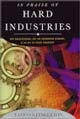
Eamonn Fingleton is the author most recently of In Praise of Hard Industries: Why Manufacturing, Not the Information Economy, Is the Key to Future Prosperity.
|
|
Contact Eamonn Fingleton |
|
|
|