|
|
Sunday, June 24th, 2001
|
I am traveling this week so I am handing over the Trading Blows column to Marc McDonald, a Texas-based Internet entrepreneur. Among McDonald's many talents is evidently a capacity for clairvoyance. He has logged on to the future and downloaded this gem from 2005. Plus �a change.... EF
WASHINGTON (Reuters, June 24, 2005). - An influential think tank today hailed America's record $800 billion 2004 trade deficit as solid evidence that the U.S. economy remains prosperous. "This data shows that our economy is still clearly the world's leader," said John Friedman of the Washington-based Free Markets Forever Foundation. "U.S. consumers continue to be the locomotive that drives the world's growth, and free trade has made this possible."
The latest deficit is more than double the record $370 billion deficit recorded in 2000.
Friedman said he is optimistic that the brisk spending spree by U.S. consumers should increase next year, as the U.S. economy continues to gain strength.
"We're hopeful that the deficit will top $900 billion in 2006," he said. Other officials said the latest trade figures confirm that the U.S. economy remains the world's most efficient and robust. "We're hopeful that these latest figures will finally persuade Tokyo to restructure Japan's ailing economy," said David Nero of the Federal Reserve. "We believe that in the near future, Japan will be forced to undertake drastic steps to curb its catastrophic trade surpluses."
In other news, The Wall Street Journal reported on Monday that the latest trade figures helped prompt a recent wave of "panic buying" of U.S. dollars and Treasury bills by Japanese investors.
"It's clear that the U.S. is regarded as the safest haven for overseas investors these days," said Chris Barton, a Wall Street analyst.
Meanwhile, the mood at the Ministry of Finance in Tokyo was gloomy, as officials there scrambled to deal with the deepening crisis.
"We've simply failed in our goal to boost Japan's consumption rate," one dejected bureaucrat admitted privately. "If this continues, I fear for the very future of our country."
Taichi Suzuki, an economics professor at Tokyo University, noted that Japan made a "big mistake" in underestimating America's prowess in importing products in a wide range of categories.
"The U.S. has been a formidable competitor in its unrivaled ability to buy goods from us," he said. "Their strengths in importing our products present us with a tough challenge."
Suzuki held out little hope that Japan can compete with the U.S., as long as Tokyo stubbornly clings to outdated economic ideas.
"Unfortunately, much of our economic activity is still mired in old-fashioned, dead-end manufacturing areas, such as steppers and industrial robots," Suzuki said. "We're working hard to follow the U.S. lead into more promising service economy activities, such as telemarketing and the legal profession, but the Americans' prowess in these fields has been tough for us to emulate."
Suzuki said Japanese consumers' ongoing reluctance to spend poses a serious challenge to the health of the nation's financial system.
"Our financial institutions are simply drowning in money," Suzuki said. "It's become a real burden to our financial system. This is why we have been pouring funds into U.S. Treasury bonds."
In other developments, White House officials downplayed a recent report by Business Week magazine that showed that Japan's gross domestic product once again exceeded that of the U.S. last year.
"There are many ways to measure a nation's prosperity and GDP is merely one of them," said Jack Ottoman, an economic adviser to President Bush.
"It's a mistake to focus solely on the GDP as a yardstick," he said. "It's clear that the U.S. is, and will remain, the world's most competitive economy."
Meanwhile, disgraced economic commentator Eamonn Fingleton, said he has "seen the light" and has begun encouraging U.S. officials not to waver in their commitment to free markets.
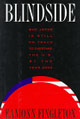
The Tokyo-based Fingleton became a laughing stock in the economics field when his 1995 book, Blindsideproved to be widely off the mark.
In the book, Fingleton predicted that Japan's economy would overtake that of the the U.S. by the year 2000. In reality, Japan didn't surpass the U.S. until 2003.
Fingleton said he was "humbled" by the experience and vowed to make amends with his new Web project, TradeDeficitsAreGood.com.
|
|
Contact Eamonn Fingleton |
|
|
|