|
|
 Eamonn Fingleton is a Tokyo-based author and economic commentator
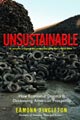
whose latest book is Unsustainable: How Economic Dogma Is
Destroying American Prosperity (Nation Books, 2003).
Eamonn Fingleton is a Tokyo-based author and economic commentator
whose latest book is Unsustainable: How Economic Dogma Is
Destroying American Prosperity (Nation Books, 2003).
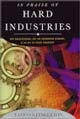
He is also the author of In Praise of Hard Industries: Why
Manufacturing, Not the Information Economy, Is the Key to Future
Prosperity. Published by Houghton Mifflin in 1999, this presented
a damning critique of the New Economy - a critique whose prescience
became widely apparent only after the Wall Street dot.com stock boom
collapsed in 2000-2001.
The book was named one of the ten best business books of 1999 by
Amazon.com Business Editor Harry C. Edwards. It was also named one of
the Ten Books that Matter by The Industry Standard, the now
defunct magazine for Internet professionals. It has been translated
into Japanese and Korean.
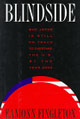
His earlier book, Blindside: Why Japan Is Still on Track to
Overtake the U.S. by the Year 2000, was named one of the Ten Best
Business Books of 1995 by Business Week. Excerpted in both
Foreign Affairs and Fortune, Blindside was published
in French and Japanese as well as in several English-language
editions.
A former editor for the Financial Times and Forbes,
Fingleton worked successively nine years in London and five in New
York before moving to Tokyo in 1985. He is thus one of the few
English-language journalists who can claim an in-depth knowledge of
all three of the world's major financial capitals. He has reported
from most of East Asia's major economies and, as a member of a
top-level American financial delegation to Beijing, met China's
supreme leader Deng Xiaoping in the mid 1980s. His commentaries on
Japanese economics and business have been published in The
Atlantic Monthly, The New York Times, the Harvard Business
Review, Challenge, The Washington Post, Time, GQ, Technology
Review, and The New Republic. He has been a contributor
to or an interviewee on many broadcast media, including CNBC, CNN,
National Public Radio, the BBC, RTE, and Sky News. In September 1999,
he was the featured interviewee on National Public Radio's Talk of the
Nation program.
Known for a series of prescient forecasts issued in Euromoney
magazine, he was almost alone among Tokyo-based commentators in
the late 1980s in predicting the Tokyo financial crash (this was a
time when most Tokyo-based analysts were superbulls on Japanese
stocks). In the 1990s he was equally adamant in standing apart from
the consensus when he consistently and correctly maintained that Japan
would ride out the strains of both the rising yen and the Tokyo crash
without having to abandon its distinctive economic institutions. In
particular he predicted that Japanese manufacturing industries --
particularly those in the highly advanced if, to the consumer, nearly
invisible, field of capital goods -- would continue to go from
strength to strength. The vindication of his prediction is written all
over the world's trade figures if not its business pages: as of 2004,
Japan's current account surplus totaled $171 billion -- more than
three times the figure recorded in 1989, the last year of the Tokyo
stock market boom.
He has interviewed many of the world's most prominent news sources �
not just quotable business figures like Rupert Murdoch, Lou Gerstner,
Warren Buffett, Sanford Weill, Peter Lynch, and Donald Trump but
fundamental economic thinkers such as Robert Solow, Paul Samuelson,
James Tobin, Milton Friedman, Friedrich von Hayek, and C. Northcote
Parkinson. His work has been read into the record of the U.S. Senate
by Senator Ernest F. Hollings and has been commended by, among others,
James Fallows, Pat Choate, John Kenneth Galbraith, Ralph Nader, Roger
Milliken, President Bill Clinton, Chalmers Johnson, and Robert Heller.
He is currently working on a new book entitled In the Jaws of the
Dragon: America's Fate In the Coming Era of Chinese Hegemony.
His writing on accounting matters at Forbes won him the
American accounting profession's 1983 award for excellence in
financial writing. He is listed in Marquis Who's Who in the World
and has testified before the United States-China Economic and
Security Review Commission. His authority as one of the West's
foremost experts on the East Asian economic system has been
acknowledged by the U.S. Business and Industry Council, which in 2001
presented him with its American values award for his work on
Blindside and In Praise of Hard Industries.
Born in Ireland in 1948, he graduated from Trinity College Dublin in
1970 and spent most of the 1970s as a Fleet Street financial
journalist, latterly as personal finance editor of the Financial
Times. In 1979 he was selected by Sir James Goldsmith to join a "dream
team" of top Fleet Street journalists who launched Now! magazine. He
moved to New York as associate editor of Forbes magazine in 1981 and
to Tokyo as East Asia bureau chief for Euromoney in 1985.
He welcomes e-mail messages and, even more so, snail-mail from readers
of his writings and tries to offer the courtesy of a reply (or at
least an acknowledgment) to all bona fide correspondents. His contact
details are:
Aoyama NK Building 2F
Minami Aoyama 4-3-24
Minato-ku, Tokyo 107-0062
Telephone: 81 3 5770 5087
Fax: 81 3 5770 5088
E-Mail: [email protected]
|
|
|