THE BEST BUSINESS BOOKS OF 1995
BY HARDY GREEN

18 December 1995
Business Week

(Copyright 1995 McGraw-Hill, Inc.)

From global power to intrigue in the boardroom, from
sharp ideas to prickly personalities, this year's top
10 business books cover an array of absorbing
subjects.

In a competitive world, global economic might is
fleeting. Is Japan beginning to fade, as some
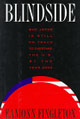
observers say? Far from it, says Eamonn Fingleton in
Blindside: Why Japan Is Still on Track to Overtake the
U.S. by the Year 2000 (Houghton Mifflin). In what our
reviewer, former Tokyo Bureau Chief Robert Neff,
called a ``prodigiously researched and engagingly
argued'' work, Fingleton asserts that, in spite of the
obvious problems, Japan continues to show inordinate
competitive muscle. And rather than putting a burden
on exporters and consumers, the mighty yen, he says,
is ``one of the principal levers'' of Japan's power.

Most provocatively, Fingleton contends that the
Japanese system, with its industrial targeting and
research and development collectives, ``is not
capitalism at all but a new formulation that is as
sharp and portentous a break from capitalism as
capitalism was from feudalism.'' Although occasionally
given to alarmism and overstatement, Blindside
provides a novel, audacious take on the world's
second-largest economy.

Another global power--albeit a less conspicuous
one--is the subject of Steven Solomon's The Confidence
Game: How Unelected Central Bankers Are Governing the
Changed World Economy (Simon & Schuster). Solomon
scopes in on the masters of the world economy, the
central bankers.

Starting with a fascinating account of Federal Reserve
Chairman Alan Greenspan's effort to limit the damage
of the 1987 global stock market crash, The Confidence
Game often ``reads more like a thriller than a
treatise on monetary affairs,'' according to our
reviewer, William Glasgall. In keeping with the book's
title, Solomon demonstrates how central bankers--even
when they're not sure what action should be
taken--have found they can talk away many near-crises.
But the author warns of a creeping danger: In the
quest for prosperity, national governments are
transferring more and more authority to the central
bankers.

All nations pursue prosperity--but only a few find it.
What do such global powerhouses as Japan, Germany, and
the U.S. have in common? They're all ``high-trust''
societies, says Francis Fukuyama, Rand Corp. senior
social scientist, in Trust: The Social Virtues and the
Creation of Prosperity (Free Press). Despite a
sometimes ponderous style and a tendency to run on,
Fukuyama doesn't shy away from the big questions--and
he has a way of seizing on current hot topics.

Here, Fukuyama addresses the relationship between
healthy community life and wealth creation. And he
asserts that selfish behavior, often extolled by
economists, can be self-defeating. For a society to
prosper, he says, it must enjoy a high level of
``spontaneous sociability,'' under which its members
tend to form and join a range of voluntary
organizations, from sports societies to religious
groups. These in turn prepare citizens to work
cooperatively in large, private companies that are
able to amass capital and develop technologies
efficiently.

In contrast, the citizens of low-trust societies such
as Italy, China, and France tend to avoid people who
are not part of their immediate families, thus
crippling attempts to build corporate structures. The
analysis ignores numerous key issues, said reviewer
Christopher Power--including the current difficulties
faced by ``high-trust'' Germany. But just by tackling
such major questions, Fukuyama has his readers
reaching for their thinking caps.

Tasty food for thought is also provided by The
Winner-Take-All Society (Free Press) by Robert H.
Frank and Philip J. Cook, professors of economics and
public policy, respectively, at Cornell and Duke
Universities. The star system, according to which
small differences in performance result in huge
differences in rewards, has long been the rule in
sports and entertainment. Now, say the authors, such
winner-take-all markets are found throughout the
global economy, with disastrous results.

The concentration of huge rewards among a handful of
winners--in business, the media, law, medicine, higher
education, and elsewhere--has dramatically widened the
gap between rich and poor, they say. Moreover, the
lure of huge gains skews the career choices of the
next generation, as too many youths strive to become
the next Michael Eisner or Madonna. And the pursuit of
blockbuster movies and best-selling books has led to a
dumbing-down of culture. How to curb this mania to be
No.1? Here, the authors fall short, said reviewer
Kathleen Madigan. Nevertheless, Winner-Take-All
Society frequently scores a bull's-eye.

The target of Serpent on the Rock (HarperBusiness), by
New York Times reporter Kurt Eichenwald, is
scandal-plagued Prudential-Bache Securities Inc.
Between 1980 and 1990, Eichenwald says, Pru-Bache
engaged in ``the most destructive fraud ever
perpetrated on investors by Wall Street.'' It sold
more than $8 billion in risky limited-partnership
offerings--resulting in losses running to hundreds of
millions.

Who was to blame? Eichenwald fingers ``a small group
of executives who cut corners or ignored problems as
they promoted the firm and built personal empires.''
The limited-partnership deals provided lavish
lifestyles for these execs--and vanished life savings
for numerous investors. Reviewer Leah Nathans Spiro
found the biggest heroes of the tale to be the state
regulators who pushed to win a reasonable settlement
for the unhappy investors. One moral: The system of
state securities regulators, often said to be
unnecessary, shouldn't be abandoned.

A very different ordeal in executive ranks is the
subject of James Champy's Reengineering Management:
The Mandate for New Leadership (HarperBusiness).
Specifically, Champy's solo sequel to Reengineering
the Corporation, which he co-authored in 1993 with CSC
Index Consulting Group colleague Michael Hammer,
points out the shortcomings of many efforts at
``reengineering''--or rethinking and redesigning basic
business practices.

``The revolution we started has gone, at best, only
halfway,'' Champy writes. Through interviews with
managers who have executed successful reengineering
efforts at such companies as Wisconsin Energy, Intel,
and Frito-Lay, Champy attempts to show readers how to
overcome the hurdles. Reviewer John A. Byrne found
much of this oral history repetitive and
uninformative. Still, he said, ``managers awash in the
ugly chaos of tearing apart their companies will find
guidance and consolation here.''

Two very different managers who were also
inventors-cum-entrepreneurs provide the fodder for
valuable business books. Neil Baldwin's Edison:
Inventing the Century (Hyperion) delineates the life
and creative processes of Thomas Alva Edison. Among
Edison's well-known contributions: the light bulb, the
phonograph, and the motion picture. Yet along with
such successes, Edison stubbornly stuck by numerous
errors in judgment--for example, calling radio a
``fad.''

Today's research and development wonks might be hard
put to adopt Edison's favorite method of
problem-solving: Simply try everything. But Baldwin
shows Edison to be equally adept at creating systems,
such as Edison Electric Light Co., a predecessor of
General Electric Co. that manufactured and installed
everything required to illuminate the night. Thus, as
reviewer Peter Coy noted, ``in an era when how-to
titles on management and creativity seem to flood into
bookstores, readers in search of inspiration could do
worse than to read this richly detailed biography.''

In Startup: A Silicon Valley Adventure (Houghton
Mifflin), Jerry Kaplan describes the experiences of an
equally ambitious, but far from equally successful,
inventor: himself. In 1987, Kaplan launched one of
Silicon Valley's hottest outfits, GO, which attempted
to pioneer computers that would translate handwritten
scribbles into computer text. By 1993, GO--along with
$75 million in investment--was gone.

Kaplan tells of his brushes with such titans as Bill
Gates and John Sculley, both of whom wanted in on the
action. Sculley's Apple Computer merely flirted with
using Kaplan's system, and Gates's Microsoft, says a
GO exec, ``ripped off our stuff.'' But it was investor
AT&T that finally pulled the plug, ending GO's
near-constant quest to stay afloat. Such engrossing
details, said reviewer Kathy Rebello, make for ``a
delectable account of what it's like to try to spin a
dream into Silicon Valley gold.''

Such dreams are often merely a prelude to regret.
Certainly, the visions of a nirvana in cyberspace are
overblown, says Clifford Stoll, author of Silicon
Snake Oil: Second Thoughts on the Information Highway
(Doubleday). Heard the one about how the Infobahn will
educate our kids, revive democracy, and allow cyber
citizens to overcome poverty and deprivation? Tell me
another, says Stoll, an
astronomer-turned-computer-security expert who once
helped to hype the Internet.

The current infatuation with computers, Stoll insists,
is endangering our libraries, which are abandoning
books for computers--and a jumble of contextless data.
Our education system, he says, is also losing out, as
funds are diverted into the eye candy of
``edutainment'' software. And the democratic forums of
online chat rooms are nothing more than another vast
wasteland, dominated by vapid chatter and extremist
bullies. Are such claims merely the ravings of a
Luddite? No, said reviewer Geoff Lewis: Stoll shows
himself to be ``a thoughtful, witty observer...who
also happens to be a serious scientist.'' As we stare
into the online future, we would do well to keep
Stoll's cautionary words in mind.

One who seems ever unruffled by the future is investor
Warren Buffett. Perhaps that's why so much about the
Oracle of Omaha gets written--and read. The best book
by far on this legendary character, said reviewer
Chris Welles, is Roger Lowenstein's Buffett: The
Making of an American Capitalist (Random House). As is
his usual practice, Buffett neither helped nor
hindered the author. Yet Welles found that Lowenstein
had produced a ``lively, smoothly written, and
elaborately researched'' biography of the
superinvestor, whose portfolio racked up a compounded
annual gain of 28.6% between 1957 and 1994.

How does Buffett do it? ``It all comes from Graham,''
he once said--Benjamin Graham, that is, the father of
``value investing,'' which holds that every stock has
an intrinsic value independent of the market's
assessment. But, of course, it's Buffett's extra je ne
sais quoi that really does the trick, keeping
Buffett-watchers guessing. ``Much about Buffett
remains obscure,'' admits Lowenstein. It's just such
mysteries that inspire journalists to keep
digging--and readers to keep searching business books
for answers.

The Best Business Books Of 1995 BLINDSIDE Why Japan Is
Still on Track to Overtake the U.S. by the Year 2000
By Eamonn Fingleton

BUFFETT The Making of an American Capitalist By Roger
Lowenstein

THE CONFIDENCE GAME How Unelected Central Bankers Are
Governing the Changed World Economy By Steven Solomon

EDISON Inventing the Century By Neil Baldwin

REENGINEERING MANAGEMENT The Mandate for New
Leadership By James Champy

SERPENT ON THE ROCK By Kurt Eichenwald

SILICON SNAKE OIL Second Thoughts on the Information
Highway By Clifford Stoll

STARTUP A Silicon Valley Adventure By Jerry Kaplan

TRUST The Social Virtues and the Creation of
Prosperity By Francis Fukuyama

THE WINNER-TAKE-ALL SOCIETY By Robert H. Frank and
Philip J. Cook

Green is BUSINESS WEEK's Books Editor.