|
|
| Fritz Is All Hat and No Cattle |
|
by Eamonn Fingleton
12/17/2001
|
A former American ambassador to Tokyo has been boasting about his success in opening the Japanese market. Unfortunately the good news has not produced any improvement in the U.S.-Japan trade deficits.
TOKYO. When former U.S. ambassador to Japan Walter Mondale returned to Tokyo this week, he was full of self-congratulation about the fruits of his trade diplomacy. As the Clinton administration's first ambassador to Japan � serving from 1993 to 1996 � he probably did more than anyone else to set the tone of U.S.-Japan trade relations in the 1990s. Looking back, he professed to be particularly pleased at the success of his trade diplomacy in financial services, autos, and mobile phones.
I hate to rain on Mondale's parade � but given that the United States continues to run huge trade deficits with Japan, some reality checking is in order. Most of his "successes" turn out to be more sizzle than steak.
Take financial services. It is true that there has been some token opening of the Japanese financial services market in the last twenty years� and a little of that is traceable to deals made in Mondale's time. But the operative word here is token. Only a few fully "house-trained" firms such as American International Group, Morgan Stanley, Salomon Brothers have been allowed to flourish in Tokyo � and then only in niche sectors considered not to pose any threat to the Japanese bureaucracy's overall regulatory control of the flow of finance to Japan's all-important manufacturing powerhouses. At the end of the day, the crucial point is that Wall Street's success stories do virtually nothing for the American economy. Why? Because virtually all of the value added created in supplying financial services is created close to the final customer � and thus to the extent that the Japanese buy financial services from American-owned entities, the value added is created mainly in Japan. The impact on America's trade deficits is negligible at best.
Now take a look at autos. There are fewer American brand cars on Japan's roads today that there were in 1985 when I first came here. Indeed the only major change I have noticed is that Mercedes-Benz and BMW have gained a little market share in Japan by more or less running Cadillac and Lincoln off the road. The only "American" cars one regularly sees in Japan are actually "American" only in name. They are Japanese cars made by Japanese workers in Japanese factories � but for Japanese trade diplomacy purposes (and evidently for Mondale's), they are counted as "American" simply because General Motors and Ford happen to have long-standing minority shareholdings in the Japanese companies that make them. The American economy receives at best only a tiny sliver of dividends from these operations � thus again these auto successes do virtually nothing to improve America's trade deficits with Japan.
Mobile phones: Fritz pushes on an open door
The story in mobile phones is, if anything, even more troubling. As Mondale tells it, he played a critical if not heroic role in the sudden blossoming of mobile phones in Japan. When he came to Japan, the industry was stifled by Japanese regulations. If we are to believe the Mondale version, thanks to his wise counsel, the Japanese authorities were persuaded to relax these stifling regulation and suddenly the Japanese mobile phone market took off like a rocket. Thus today Japan boasts one of the highest rates of mobile phone ownership in the world (almost every teenage school girl in Japan seems to carry a mobile phone). Japanese mobile phones moreover are famously far more advanced than anything available in the United States or Europe. Big success all round � not least for the American mobile phone industry. Or so Mondale would have us believe.
In reality, the development of Japan's mobile phone market is the very antithesis of an American trade success story. To be sure, the deregulation of the Japanese mobile phone market was a bonanza for manufacturers � but with few exceptions the manufacturers who benefited were Japanese , not American. manufacturers to boost their sales. The reason is that few American-brand phones are sold in Japan. Moreover even American-brand phones such as those sold under the Motorola name are actually full of Japanese manufacturing content � and boast little, if any, American content.
The point is that Japanese manufacturers utterly dominate the business of making the nine key enabling components in mobile phones. Beginning in the 1970s, Japanese companies like Toshiba, NEC, Murata, and dozens of others spent twenty years working on the huge technical challenge of miniaturizing the nine key components. As they cranked up production from a tiny base in the early 1990s, they found that worldwide demand for mobile phones massively exceeded their capacity to supply the components. Had Japanese telecommunications regulators not severely suppressed the development Japanese market for mobile phones, Japan alone would have consumed most of the available component supplies. That would have greatly cut Japan's export revenues. Worse, it would have opened up opportunities for foreign component suppliers to play catch-up and, boosted by sky-high profit margins, to establish a permanent position in the industry. Thus, seen from the point of view of Japanese mercantilism, it was imperative that demand in the Japanese market be temporarily suppressed while the Japanese components makers securely established their dominant position as suppliers to foreign mobile phone assemblers such as Nokia, Ericsson, and Motorola. Enter Fritz Mondale in 1993, just as the Japanese components makers were finally beginning to get on top of their capacity problems. With components now coming into plentiful supply, he was pushing on an open door. He asked the regulators to remove the absurd rules suppressing the home market for the phones and they duly complied. The rest is history.
One thing is clear: the successes Mondale boasts of did nothing for America's chronically huge trade deficits with Japan. Quite the reverse. The deficit in 2000, the last year of the Clinton administration, totalled $81.6 billion. That was an increase of more than 64 percent on 1992, the last year before the Clintonites took office.
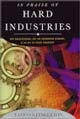
Eamonn Fingleton is the author most recently of In Praise of Hard Industries: Why Manufacturing, Not the Information Economy, Is the Key to Future Prosperity (Houghton Mifflin, 1999).
|
|
Contact Eamonn Fingleton |
|
|
|
|